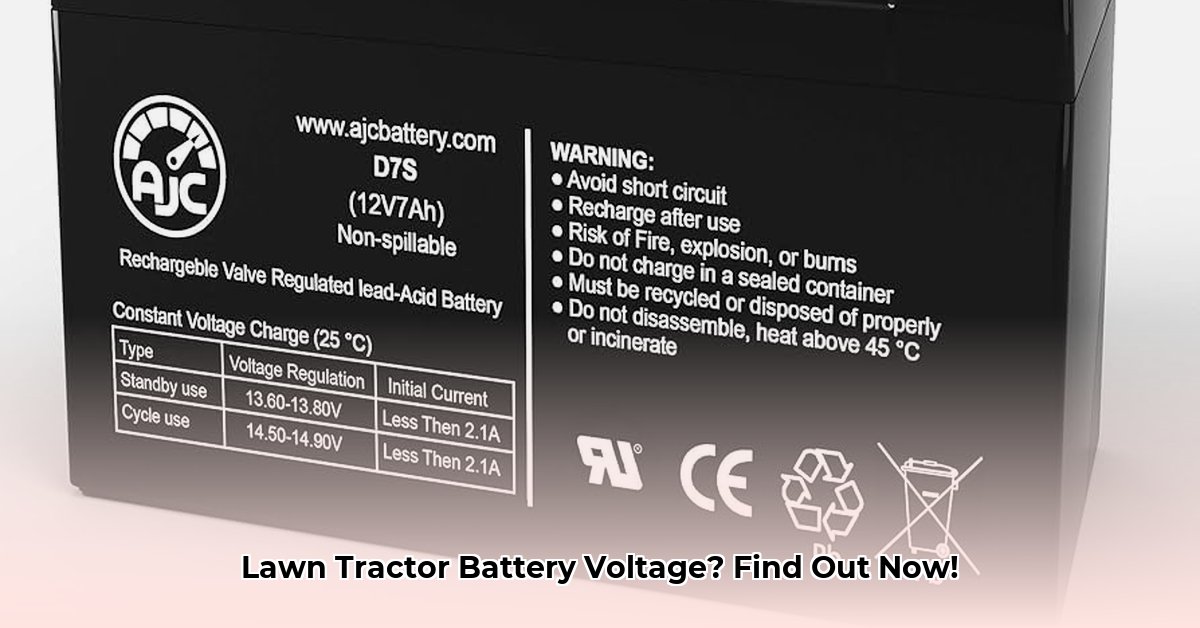
Choosing the right battery for your lawn tractor can seem daunting, but it's simpler than you think. This guide provides a step-by-step process to ensure you select the correct voltage, maximizing your mower's performance and longevity. Incorrect voltage can damage your equipment, so let's get this right! For more in-depth information, check out this helpful guide.
Understanding Your Tractor's Power Needs: The Crucial First Step
Before purchasing a new battery, pinpoint your lawn tractor's voltage requirement. This vital information is typically found in two key locations:
The Sticker on Your Tractor: Examine your tractor carefully. A sticker near the battery or under the hood usually specifies the required voltage.
Your Owner's Manual: If the sticker is missing or unclear, your owner's manual will definitively state the correct voltage.
Locating this information is paramount. Using an incorrect voltage risks damaging your tractor's electrical system, so take the time to find it! Most gas-powered tractors use a standard 12-volt lead-acid battery, but newer models, especially electric ones, often utilize higher voltages (36V, 48V, or even 80V). These higher-voltage batteries offer extended runtimes and greater power but are more costly.
Identifying Your Current Battery's Voltage: A Quick Check
Before buying a replacement, examine your existing battery. The voltage is usually printed directly on the casing (e.g., "12V," "36V"). If you can't find the voltage printed, consult your owner's manual or the sticker on the tractor. Knowing your current battery's voltage is critical before choosing a new one.
Choosing the Right Replacement: Matching the Voltage Precisely
Once you've identified the required voltage, selecting a replacement is straightforward: choose a battery with the exact same voltage. Using an incompatible voltage is risky:
Higher Voltage: This can severely damage your tractor's electrical system. It's like forcing a square peg into a round hole – dangerous and ineffective.
Lower Voltage: Your mower won't function correctly. It might struggle to start or operate weakly, similar to a car with a depleted battery.
Types of Batteries: Lead-Acid vs. Lithium-Ion: Weighing Your Options
Two primary battery types are commonly available for lawn tractors:
| Battery Type | Advantages | Disadvantages |
|---|---|---|
| Lead-Acid | Affordable, readily available | Shorter lifespan, requires periodic maintenance (water) |
| Lithium-Ion | Longer lifespan, low maintenance, extended runtimes | More expensive, sensitive to extreme temperatures |
The best choice depends on your budget and needs. Lead-acid batteries are reliable and cost-effective but require more upkeep. Lithium-ion batteries offer improved performance and longevity but are a more significant investment.
Testing Your Battery Voltage (Using a Multimeter): Getting a Precise Reading
For a precise voltage measurement, use a multimeter (available at most hardware stores). A multimeter is an inexpensive tool that can help confirm the voltage of your battery.
Important Safety Note: Always disconnect the negative (-) battery terminal before using a multimeter to prevent short circuits and shocks.
Connect the Multimeter: Carefully connect the multimeter's probes to the battery terminals (red to positive (+), black to negative (-)).
Read the Voltage: The multimeter's display will show the voltage. A significantly lower reading than expected indicates a weak or failing battery.
Troubleshooting Low Voltage Issues: Identifying Potential Problems
If your lawn tractor's battery voltage is low, several factors may be at play:
Charging System Problems: The alternator or charging system might not be functioning properly.
Parasitic Drain: A small but persistent electrical drain could deplete the battery even when the mower is off.
Old and Worn Battery: Batteries degrade over time.
This guide helps you choose the correct lawn mower tractor battery voltage. Remember to always prioritize safety and consult your owner's manual or a qualified mechanic if you're uncertain about any step.
How to Choose the Right Voltage Lawn Mower Battery: A Step-by-Step Guide
Here's a concise, step-by-step guide:
Consult Your Mower's Manual: Your owner's manual specifies the required voltage and recommended amp-hour (Ah) rating. This is the most crucial step.
Check the Current Battery (if applicable): Note the voltage and Ah rating of your existing battery. This provides a baseline for comparison.
Match the Voltage Exactly: Choose a replacement battery with the exact same voltage. This is non-negotiable for safe operation.
Consider the Amp-Hour (Ah) Rating: The Ah rating determines runtime. A higher Ah rating provides longer operation between charges.
Select Your Battery Type: Choose between lead-acid and lithium-ion based on your budget, maintenance preferences, and climate.
Purchase and Install: Buy the correct battery from a reputable retailer and carefully follow the installation instructions for safe handling.
Safety First: Essential Precautions When Handling Batteries
Always prioritize safety:
- Wear safety glasses and gloves.
- Work in a well-ventilated area.
- Never short-circuit the battery terminals.
- Dispose of old batteries properly.
- Consult a qualified mechanic if unsure about any step.
Remember, selecting the correct battery voltage is essential for your lawn tractor's optimal performance and longevity. By following these steps, you can confidently maintain your equipment and enjoy a healthy, well-functioning lawnmower.